
How to Choose the Right Gas Analyser for Your Industry
Read More

A carbon monoxide (CO) reading in an industrial setting is a direct measure of how much CO gas is in the air. This figure, almost always given in parts per million (ppm), speaks volumes about the safety of your workspace and the health of your processes. A low, stable reading is good news; a high or erratic one is an immediate call to action.
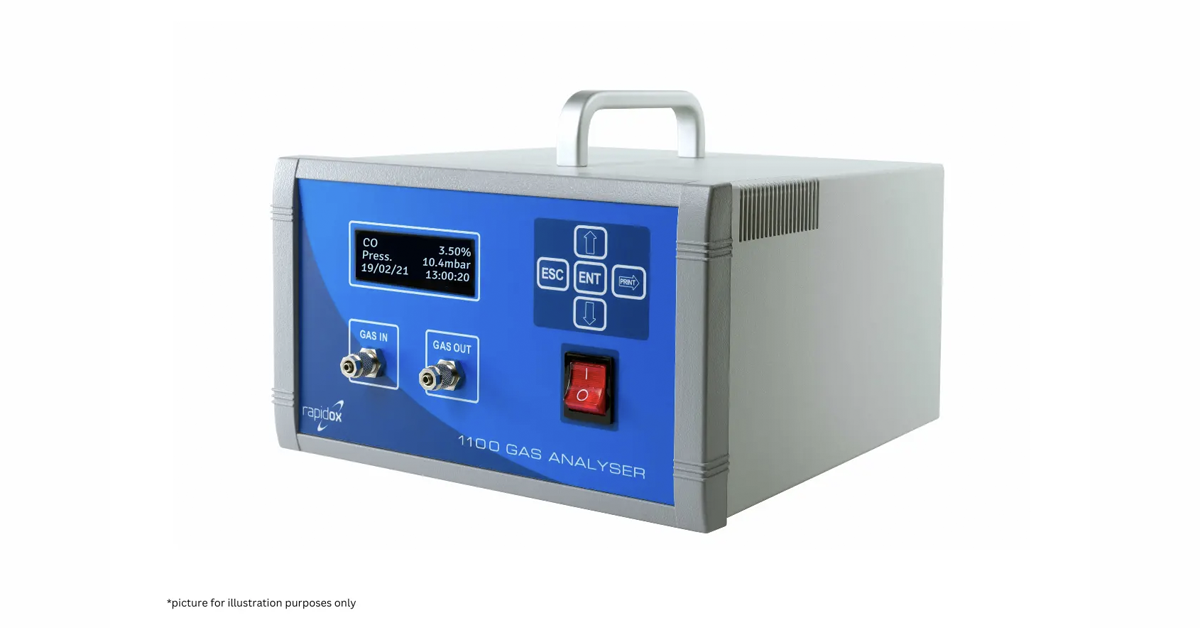
Image: Rapidox 1100 Carbon Monoxide Analyser
The number on your analyser screen quantifies a gas you cannot see, smell, or taste. Unlike carbon dioxide (CO₂), a natural part of the air we breathe, carbon monoxide is a by-product of incomplete combustion. This makes it a common feature—and a common hazard—in countless industrial processes that involve burning fuel.
So, what does ppm actually mean? It is simply a ratio: how many particles of CO are present for every million particles of air. A good way to picture this is to think of a single drop of black ink in a full bathtub. It is a tiny amount, but it is enough to change the entire contents. For an operator or a safety manager, these readings are far more than just data points; they are vital signs for both process efficiency and human wellbeing.
Any reading that strays from the expected norm is an early warning system. It is a clear signal that something is not right, giving you a chance to protect your people and your equipment before a small issue becomes a serious one.
A CO reading carries significant weight in several key areas:
A fluctuating or unexpectedly high CO reading is a direct signal from your process. It tells a story about combustion efficiency, potential leaks, or an emerging safety hazard that cannot be ignored.
The whole point of monitoring is to turn these numbers into actions. The first step is always to establish what a “normal” reading looks like for your specific application. Once you know your baseline, you can create a safe, efficient, and reliable operational environment.
To dig deeper into the specifics, you can find a detailed overview on our guide to carbon monoxide measurement. This guide will walk you through interpreting these numbers, moving from the basic principles to the practical steps for ensuring accuracy.
To manage industrial safety effectively, you first need to speak the language of gas measurement. When it comes to carbon monoxide, readings are almost always given in parts per million (ppm). This unit is perfectly suited for quantifying trace gases, giving us a precise way to measure tiny, yet potentially dangerous, concentrations in the air.
However, a number on a screen does not tell the whole story. What turns a simple reading into an actionable safety alert are the official limits set by regulatory bodies. In the UK, the Health and Safety Executive (HSE) establishes legally binding Workplace Exposure Limits (WELs) for hundreds of hazardous substances, including carbon monoxide.
These limits are not just arbitrary figures; they are grounded in extensive toxicological data to protect workers’ health over a lifetime of employment. For CO, the HSE defines two key thresholds that every safety manager and operator must know inside and out. Getting these right is the key to configuring your gas analyser alarms correctly and ensuring you stay compliant.
The two main WELs for carbon monoxide define safe exposure over different timeframes. This is because both prolonged low-level exposure and brief high-level spikes carry distinct risks.
These two figures—20 ppm over 8 hours and 100 ppm over 15 minutes—are the cornerstones of CO safety in UK industry. They provide clear, legally enforceable benchmarks that separate an acceptable working environment from a hazardous one.
Your gas analyser’s alarm setpoints should directly reflect these official WELs. This ensures your system gives an immediate, unambiguous warning the moment a carbon monoxide reading crosses from a manageable level to a genuine occupational hazard.
A common and effective practice is to set a low-level alarm slightly below the LTEL—say, at 15-18 ppm—to give an early heads-up. A high-level, more urgent alarm should then be set at or just below the STEL (e.g., at 90-100 ppm) to trigger immediate evacuation and investigation protocols.
This tiered approach turns your monitoring system into a proactive safety tool, not just a reactive one. By aligning your equipment with HSE guidelines, you build a robust, intelligent defence against the invisible threat of carbon monoxide.
High carbon monoxide readings are almost always a tell-tale sign of one thing: incomplete combustion. Whenever a carbon-based fuel like natural gas, propane, or diesel burns without enough oxygen, it produces CO instead of the much less harmful carbon dioxide (CO₂). In an industrial setting, this can happen for all sorts of reasons—a poorly maintained piece of kit, blocked ventilation, or even as a deliberate part of a process.
Understanding where to look for potential CO generation is the first step toward staying ahead of the risks. It is about being proactive, not just reacting when an alarm goes off. Many industrial operations are prime candidates for producing carbon monoxide, turning everyday activities into potential hazards if they are not properly monitored and controlled.
The most common sources of CO are tied to heating, power generation, and vehicles moving around a facility. Put simply, any equipment that burns fuel is a potential emitter, especially if it is not running at peak efficiency.
You will find these usual suspects in most industrial sites:
Identifying these high-risk areas is not just a box-ticking exercise for compliance; it is fundamental to creating a strong safety culture. Knowing that a furnace room or a vehicle charging bay has a higher intrinsic risk allows you to implement targeted monitoring and stricter ventilation rules.
The danger often gets worse during colder months when buildings are sealed up to keep the warmth in, drastically reducing natural air circulation. This seasonal pattern is a key factor in industrial safety planning. Data on unintentional CO poisoning in the UK shows that December has the highest number of fatalities, largely due to the increased use of heating systems. You can explore the detailed seasonal trends in the UK government’s findings on Statista.com.
Beyond general combustion, certain manufacturing and chemical processes actually generate CO on purpose, either as part of a reaction or as an unavoidable by-product. In these situations, monitoring carbon monoxide is crucial for both safety and process control.
This includes specialised applications like heat treatment of metals, solder reflow in electronics manufacturing, and various chemical synthesis operations where CO is used as a reagent. Here, the gas is an integral part of the process, making accurate monitoring absolutely essential.
The reliability of your carbon monoxide readings hinges entirely on the technology doing the work. Picking the right sensor is not just a technical choice; it is a fundamental decision that affects the safety of your team and the integrity of your processes.
In industrial gas analysis, the two most common players are electrochemical and non-dispersive infrared (NDIR) sensors. Understanding how they operate is the key to making an informed choice, as each has distinct strengths and weaknesses that make one a better fit for certain jobs over the other.
Electrochemical sensors are everywhere, largely because they offer high sensitivity at a relatively low cost. You can think of one as a tiny fuel cell designed to react only with a specific gas.
When carbon monoxide drifts into the sensor, it kicks off a chemical reaction that generates a small electrical current. The strength of this current is directly proportional to the amount of CO present—meaning higher carbon monoxide readings produce a stronger signal. They are excellent for general safety monitoring where CO is the main gas you are worried about.
NDIR sensors work on a completely different principle. They shine a beam of infrared light through the gas sample. CO molecules are known to absorb light at a very specific wavelength, so the sensor simply measures how much of that particular light gets absorbed on the other side.
This method is highly specific to CO and far less prone to being fooled by other gases. It delivers exceptional stability and a long operational lifespan, making it the ideal choice for precision process control where accuracy is everything.
Furnaces, machinery, and various industrial processes are all significant potential sources of CO which is why careful sensor selection is so critical for reliable detection.
One of the biggest challenges with electrochemical sensors is cross-sensitivity. This is what happens when a gas other than your target gas triggers a reaction, leading to a false positive reading. A common culprit in many industrial settings is hydrogen (H₂).
In applications like hydrogen production or heat treatment with forming gas, an electrochemical CO sensor can easily mistake hydrogen for carbon monoxide. This creates dangerously misleading data. An NDIR sensor, which is immune to hydrogen interference, is the only correct choice here.
Getting these details right is vital. While these principles apply across all settings, from industrial plants to private residences, you can learn more about the practical steps for ensuring home safety by exploring resources on how to test for carbon monoxide in your home.
Ultimately, the best sensor depends entirely on your specific environment and the other gases present. For expert guidance, read our detailed article on choosing the right carbon monoxide measuring instrument to ensure your data is always accurate and trustworthy.
An advanced gas analyser is only as good as the procedures used to operate it. Getting consistently trustworthy carbon monoxide readings really comes down to two things: precise gas sampling and rigorous calibration. Nailing these is the difference between data you can bank on and readings that are misleading or, worse, dangerous.
It all starts with proper gas sampling, which ensures the analyser sees a true snapshot of the environment. A poorly placed sample probe or a tiny leak in the line can pull in ambient air, diluting the sample and giving you a falsely low reading. It is a simple mistake, but one with major consequences.
Equally important is sample conditioning. Many industrial processes produce hot, wet, or dirty gas streams that can easily damage sensitive sensors or completely throw off the results.
To prevent interference and protect your equipment, a few pre-treatment steps are non-negotiable for reliable carbon monoxide readings.
These measures make sure you are measuring pure CO, not a cocktail of gases influenced by other environmental factors.
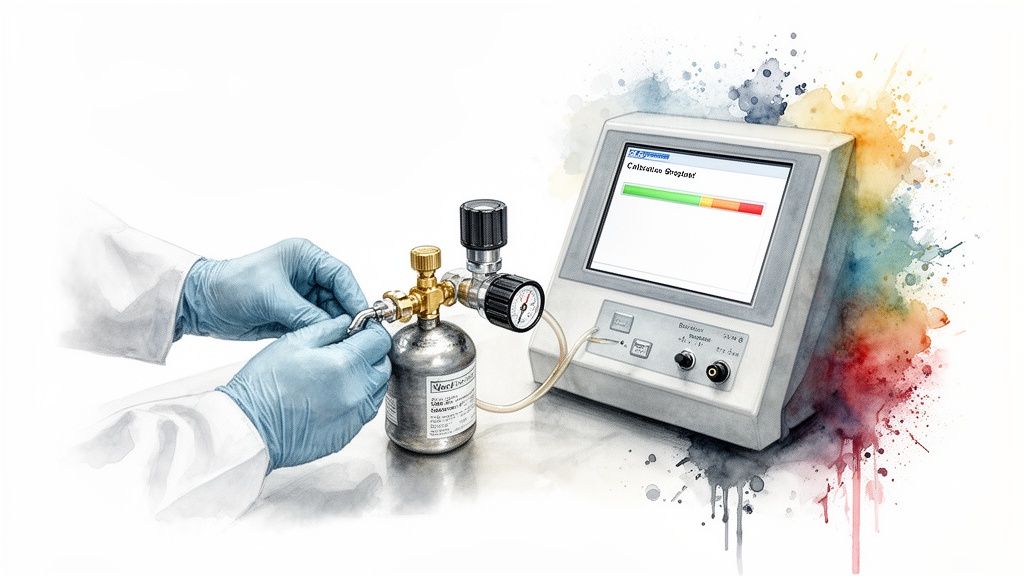
Calibration is, without a doubt, the most critical maintenance task for any gas analyser. It is the process of checking and adjusting the instrument’s response against a certified calibration gas with a known CO concentration. Without it, you have no real way of knowing if your readings are accurate.
Over time, all sensors experience ‘drift’—a gradual loss of sensitivity that causes readings to become inaccurate. Regular calibration corrects this drift, re-establishing the analyser’s accuracy and ensuring it performs exactly as it should.
This is not just a friendly recommendation; it is a fundamental requirement for safety compliance and data integrity. Better safety standards and widespread use of detection systems have played a massive role in cutting down CO-related incidents. In the UK, for instance, fatalities from carbon monoxide poisoning fell by 34.5% between 2010 and 2020, a trend that really shows the impact of diligent monitoring. You can learn more about these UK carbon monoxide statistics on the ONS website.
Understanding this process is vital, which is why we have put together a dedicated article explaining why calibration is key for gas analysers. Following a strict calibration schedule is the ultimate best practice for mastering your measurements.
Unexpected carbon monoxide readings can be a real headache, but they rarely signal an immediate crisis. More often than not, there is a logical explanation. Having a solid troubleshooting process helps you quickly figure out what is going on, ensuring your monitoring system stays a reliable safety tool. By methodically working through the possibilities, you can find the root cause, get your operations back on track, and restore confidence in your data.
Most problems fall into one of three buckets: readings stuck at zero, readings that jump all over the place, or readings that are suddenly way too high. Each scenario points to a different set of potential culprits, from simple mechanical faults to more complex sensor or calibration issues.
When your analyser sits at zero, it is tempting to assume all is well. While it might be, a consistent zero could also mean your system is not working at all. Before you relax, it is crucial to confirm the reading is genuine.
The first logical step is to check the entire sampling system from end to end. Your checklist should include:
Erratic or surprisingly high carbon monoxide readings demand immediate attention. First things first: verify if there is a genuine leak or process failure. Once you have confirmed the area is safe, the problem most likely lies with the equipment itself.
An unusually high reading could be a classic case of cross-sensitivity, where another gas is fooling the sensor into thinking it is CO. Alternatively, it might point to a calibration error. If the sensor’s baseline has drifted, it will over-report the actual CO concentration.
The context of these readings is always key. While carbon monoxide is a universal risk, some areas can become hotspots for incidents. For example, historical reports have identified regions like Ulster and Devon as having higher incident rates in the past, a stark reminder that no location is immune and precise measurement is vital everywhere. You can find more UK carbon monoxide safety statistics on the CO-Gas Safety website.
By troubleshooting methodically, you can tell the difference between a genuine environmental hazard and an instrument fault, making sure you take the right action every time.
When you are dealing with the daily demands of industrial safety and process control, it is natural for questions about carbon monoxide readings to come up. This quick-reference section gives you clear, straightforward answers to some of the most common queries we get about CO monitoring.
The ideal calibration frequency really depends on your specific application, the sensor technology you are using, and what the manufacturer recommends. As a general rule of thumb, most industrial sensors need calibrating every 6 to 12 months to ensure your carbon monoxide readings stay accurate.
However, if you are working in critical safety applications or harsh environments where the sensor gets exposed to contaminants, we strongly advise a more frequent schedule. Calibrating every 3 months is the best way to maintain total reliability in those conditions.
A domestic CO detector is essentially a simple alarm designed to warn you about dangerous levels of carbon monoxide in a home. It is a basic go/no-go device and does not provide any precise measurements.
An industrial CO analyser, on the other hand, is a precision instrument. It gives you exact, quantitative carbon monoxide readings, typically in parts per million (ppm). These devices are vital for process control, safety compliance, and detailed data logging, offering far greater accuracy and functionality.
Think of it this way: a detector is like a smoke alarm that just screams “there is a problem!” An analyser is like a sophisticated diagnostic tool that tells you exactly what the problem is and how severe it is.
Yes, absolutely. High levels of humidity can definitely interfere with certain types of sensors, especially electrochemical ones. When there is too much moisture in the gas sample, it can throw off the readings or, in extreme cases, even damage the sensor itself.
This is exactly why proper sample conditioning is a non-negotiable step. Using a moisture trap or filter to dry the gas before it ever reaches the analyser is crucial for getting trustworthy data in humid industrial environments.
For precision gas analysers and expert advice on maintaining accurate carbon monoxide readings, trust Cambridge Sensotec. Explore our range of industrial monitoring solutions at https://cambridge-sensotec.co.uk.
Please leave your email address below and we'll reach out promptly.